Quick Answer
Product Details
This research-based LAST BATTERY review explains what the official product page documents, which claims are vendor statements, and what remains unverified. Confirm terms before buying.
- Energy & Home
- Product category: Energy & Home
- Buyer check: compare the official feature list with your needs.
- Buyer check: confirm supported devices and platforms.
- Buyer check: review account and setup requirements.
- Buyer check: check current access and delivery details.
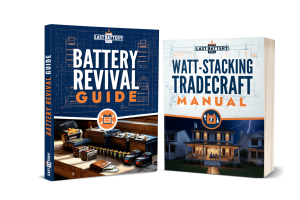
LAST BATTERY Review — This research-based review explains what is documented about the product, which claims come from the vendor, and what remains unverified. It does not represent first-hand testing by ReviewScoutLab. Disclosure: This article may contain affiliate links. If you purchase through them, we may earn a commission at no extra cost to you.
Related reading: Precision Brain Support… Review: What Sets It Apart? · The Bounceback Blueprint Review: PLR Kit Buyer Guide · How to create different book types (poetry, children’s stories, coloring/activity books, puzzle books) with an AI publishing studio
Quick verdict
Based on the available product page material, LAST BATTERY is presented by its vendor as an “anti-grid” method and training reportedly created/endorsed by a Vietnam veteran. The vendor frames the offering as a way to reduce or eliminate conventional power bills. Those outcome claims are vendor statements and have not been independently verified. Check official seller terms and current details on the product page before buying.
What is LAST BATTERY?
According to the vendor product page, LAST BATTERY is marketed as an “anti-grid” tradecraft system associated with a Vietnam veteran. The official sales page headline reads: “This Vietnam’s Vet’s ‘Anti-Grid’ Tradecraft Cancels Your Power Bills.” That phrasing is a vendor claim; independent verification of specific technical methods or guaranteed outcomes is not available in the supplied source facts.
How it is described to work
The vendor presentation uses the term “anti-grid tradecraft” to describe the approach. The publicly reviewed materials do not include a granular, independently verified technical manual or evidence demonstrating performance. Where the vendor provides instructional content or methods, those are vendor statements and should be read as such.
What you (may) get
The product page copy implies instructional material around an “anti-grid” approach and positions a Vietnam veteran as the origin of that tradecraft. The reviewed sources does not document exact deliverables (modules, format, downloads, or supplemental materials). Confirm the current list of deliverables on the official product page before purchasing.
Key features (as described by the vendor)
- Vendor-stated “Anti-Grid” tradecraft instruction (vendor claim)
- Vendor-stated positioning around power-bill reduction/cancellation (vendor claim)
- Vendor-branded origin story involving a Vietnam veteran (vendor claim)
- Sales-page contact and policy links visible on the official page (verified presence)
- Official product page identity headline present and verified (verified presence)
- Vendor-provided promotional presentation (vendor claim; format and scope not independently verified)
Benefits & practical use cases (analysis)
Analysis: If the vendor materials contain practical instructions for reducing reliance on a public power grid, buyers seeking energy-independence techniques or alternative power strategies might find the content relevant. Because the product materials and technical details are not independently verified in the available documentation, treat expected benefits as contingent on the actual content delivered and on the buyer’s technical skill, local regulations, and equipment requirements.
Limitations and important caution
- The most prominent product claims (cancel power bills) are vendor statements and are not independently verified by ReviewScoutLab.
- There is no supplied official technical documentation or third-party evidence in the reviewed sources demonstrating measured results.
- Legal and safety implications of energy-system modifications can be significant; the reviewed materials do not provide verified safety approvals or regulatory compliance details.
- Pricing, refund or guarantee details were not provided in the verified source facts and must be confirmed on the seller’s site before purchase.
Who may benefit
This offering may interest people researching off-grid ideas, energy independence, or alternative approaches to household energy costs — provided they verify technical details, safety, and regulatory compliance. It may be most useful to readers who already understand electrical safety and local building/electrical codes and who can critically evaluate vendor instructional material.
Who should probably skip it
Readers without technical knowledge of electrical systems, or those who cannot confirm compliance with local regulations, should be cautious. Also skip if you need independently verified performance data or certified hardware documentation that the supplied reviewed sources does not include.
Pricing, licence and refund checks
Price and licence information were not provided in the verified source facts. The vendor page may advertise offers or terms, but this review cannot confirm current pricing, refund periods or licence scope. Check the official product page for up-to-date pricing, licence terms and the seller’s written refund/eligibility policy before buying.
Alternatives to consider
If your goal is energy independence or reducing utility bills, consider well-documented alternatives such as certified solar-plus-storage systems, energy-efficiency retrofits, or contractor-supplied off-grid installations that include hardware warranties and certified installers. Those options typically offer clearer documentation, regulatory compliance paths, and verifiable performance data. This review does not compare LAST BATTERY to any specific alternative using first-hand tests because that evidence is unavailable in the reviewed sources.
Pros and cons
Pros (based on vendor materials and available facts)
- Vendor positions LAST BATTERY as an “anti-grid” approach to power bills (documented vendor claim).
- The sales page headline and identity statement are verified in the supplied source facts.
- Marketing emphasizes a veteran origin story, which may appeal to some buyers (vendor claim).
Cons
- Key outcome claims (cancelling power bills) are vendor claims and not independently verified in the reviewed sources.
- No verified technical documentation, third-party testing, or certification details were provided in the available documentation.
- Potential legal, safety or regulatory issues are not addressed in the verified source facts and require buyer due diligence.
Decision filter — 5 quick questions
- Do you need verified technical evidence or certified hardware? If yes, seek alternatives with third-party data.
- Are you comfortable assessing electrical safety and local code requirements? If not, consult a qualified electrician.
- Can you confirm current pricing, licence scope and seller refund/eligibility terms? Verify on the official product page.
- Do you prefer an instructional/training approach rather than turnkey hardware and installation? LAST BATTERY appears to be instructional in marketing tone.
- Is vendor origin story (as a Vietnam veteran) important to your purchase decision? That element appears in the vendor copy but does not verify technical outcomes.
FAQ
Is LAST BATTERY a verified technical product?
No independent technical verification or third-party testing is included in the supplied source facts. The claims on the official page are vendor statements and should be validated by buyers before relying on them.
Does LAST BATTERY guarantee cancelled power bills?
The product page headline advertises cancelling power bills, but that is a vendor claim. This review did not find verified evidence in the available documentation to confirm such guarantees. Check current seller terms and documentation.
Can I get a refund?
The reviewed sources did not include a verified refund duration or policy. Do not assume any specific refund period; check the seller’s current written refund and eligibility terms before buying.
Detailed use scenarios
Readers deciding whether to investigate LAST BATTERY further will find it helpful to imagine specific, realistic scenarios where the vendor-stated content (instructional “anti-grid tradecraft”) might be relevant — and where it likely will not be sufficient on its own. The descriptions below are based on how the vendor frames the product (official sales page language and marketing claims) and on the limitations of the supplied source facts (no verified technical manuals or third‑party testing included).
- Research-oriented DIYer exploring off-grid ideas: If you are a technically curious homeowner or hobbyist who wants conceptual instruction about alternative approaches to reducing grid reliance, the vendor-stated training could provide ideas, approaches, or a methodology. Treat the vendor material as educational content (vendor-provided claim) rather than turnkey hardware or guaranteed performance.
- Experienced electrician or engineer evaluating possible methods: A licensed practitioner who already understands codes and safe electrical practice might use the vendor’s content as a supplementary reference, provided they independently verify any proposed modifications against local regulations and accepted safety standards. Because source facts do not include verified technical documentation, licensed professionals should expect to do their own engineering and validation.
- Buyer seeking a certified, plug-and-play off-grid system: LAST BATTERY, as described in vendor materials, appears focused on instruction rather than selling certified hardware plus installation. If you need equipment with warranties, UL/NRTL certification, and contractor installation, consider commercially documented solar-plus-storage systems or contractor-supplied off-grid installations instead — these alternatives typically include verifiable specs and certified installation paths (this review’s source facts did not include such certification for LAST BATTERY).
- People in jurisdictions with strict utility or building codes: If your local rules restrict grid modifications, tapping into grid infrastructure, or require permits for energy systems, relying solely on instructional materials without professional oversight can create legal and safety risks. The supplied source facts do not prove regulatory compliance or permitted methods in any jurisdiction; verify compliance locally before acting on any vendor instructions.
Practical workflow guidance for evaluating and using instructional energy products
When a product is marketed primarily as instructional tradecraft (as LAST BATTERY is in vendor materials), a buyer-focused workflow reduces risk. The steps below are general, evidence-based decision steps informed by the review’s source facts (which confirm vendor positioning but do not verify technical claims).
- Identify concrete deliverables on the official page: Before purchase, confirm the exact format and scope of what the vendor says is supplied — for example, number of modules, video vs. written manuals, schematics, parts lists, and any recommended tools. The supplied source facts explicitly note that exact deliverables were not documented in the packet; therefore, verification on the seller’s page is essential.
- Ask for sample content or a table of contents: If possible, request a sample lesson or a TOC to gauge technical depth. Vendor presentations can range from high-level concepts to detailed step-by-step engineering. The review cannot confirm which applies here because the source facts did not include the product curriculum.
- Map content to your own skills and local regulations: Compare the instructional scope against your electrical skills and local codes. If the material assumes wiring, inverter installation, or grid-tie modifications you are not qualified to perform, plan to engage a licensed electrician. The review flags safety and legal implications as important limitations and notes absence of verified safety approvals in the available documentation.
- Cross-check parts and hardware guidance: If the instructions recommend specific components or setups, identify whether those parts require certifications (e.g., UL) in your area. Because the source facts did not include certified hardware documentation, treat any parts lists as vendor claims until you can verify specs and certification from manufacturers.
- Plan a staged test or pilot: For complex changes, implement a small-scale pilot under professional supervision where possible. The existing review emphasizes that vendor outcome claims (e.g., “cancel power bills”) are not independently verified and that buyers should validate feasibility before committing to larger modifications.
- Document decisions and approvals: Keep written approvals from any permitting authority or electrician stating that the proposed work meets local code. The review notes that regulatory and safety consequences were not addressed in the available documentation — documenting approvals mitigates risk.
Comparisons — when to choose LAST BATTERY-style instruction versus established alternatives
Because the supplied source facts classify the product as vendor-led instructional material without independent verification, here are practical comparison points to help you decide between investigating this kind of product and choosing established alternatives like certified solar-plus-storage or contractor installations.
- Need for verifiable performance and certifications: Choose certified, manufacturer-backed hardware and contractor installations when you require verifiable output, warranties, certifications (UL/NRTL), and documented installation processes. The source facts did not include such verification for LAST BATTERY, so do not assume the vendor provides certified hardware or third-party test data.
- Desire for instructional tradecraft and low-cost experimentation: If your goal is to learn alternative methods, evaluate tradecraft, or explore conceptual approaches, an instructional product might be useful. Keep in mind that practical implementation will typically still require certified components and professional oversight for safety and compliance.
- Regulatory complexity and permit needs: If your area makes permitting or grid-tie more complex, a contractor-supplied solution often manages permits and ensures compliance. Instructional products generally do not include permit services — the provided facts do not suggest LAST BATTERY includes regulatory navigation services.
- Hands-on ability and comfort with risk: For buyers who have strong electrical skills and accept responsibility for safety and code compliance, vendor instruction may accelerate learning. For those who cannot assume those responsibilities, alternatives with professional installation reduce personal risk.
Buyer-fit checklist — quick readiness questions
Use this checklist to decide whether to proceed to the next step (view official product materials or contact the vendor). These prompts align with the verified limitations and vendor claims in the source facts.
- Am I primarily seeking instructional content rather than turnkey certified hardware? (Vendor materials position LAST BATTERY as instructional.)
- Do I have the technical knowledge or access to a qualified electrician or engineer to evaluate any proposed modifications?
- Can I confirm whether the product includes detailed schematics, parts lists, and safety guidance before purchase? (Supply facts did not document deliverables.)
- Have I checked local regulations about grid modifications or alternative energy installations?
- Am I prepared to verify any parts recommendations for certification (e.g., UL listing) independently?
- Do I prefer an educational route to experimentation, or do I need a solution with documented, certified performance and professional installation?
Expanded FAQ — what to ask the seller and how to interpret answers
The seller’s page provides promotional claims and an origin story (vendor statements verified to be present). Below are practical questions you can take to the seller or use as a checklist when reviewing the official product page, with guidance on interpreting the likely implications of different answers.
- Q: What exactly is included in the purchase (format, modules, downloadable files)?
- A: If the seller provides a detailed list (module titles, runtimes, downloadable schematics), that indicates a more substantive instructional offering. If the response is vague, expect high-level marketing content rather than actionable engineering documentation. The source facts did not list deliverables, so this is important to confirm.
- Q: Do the instructions reference certified hardware or include recommended parts with manufacturer model numbers?
- A: If model numbers and manufacturer links are provided, you can independently verify certifications and specs. If the seller recommends non‑specific components (e.g., generic batteries, inverters without specs), treat those recommendations as vendor claims requiring professional vetting.
- Q: Are the methods described compatible with legal grid-tie or off-grid installations in my jurisdiction?
- A: Only a seller who provides jurisdiction-specific guidance or suggests consulting local authorities is offering responsible advice. If the seller claims universal applicability without mention of permits or local code, be cautious — the review’s verified source facts do not show regulatory compliance documentation.
- Q: Is there any third-party testing, certification, or independent review available?
- A: If the seller can point to independent testing or certified component documentation, that strengthens credibility. The source facts for this review did not include any third-party verification, so absence of such evidence should be treated as a limitation.
- Q: Does the product include safety warnings and recommended professional qualifications for installers?
- A: Responsible instructional content typically lists safety warnings and recommends specific licensed trades to perform high-risk tasks. If such warnings are missing from the materials you review, do not assume the proposed work is safe for amateur implementation.
Final notes on evidence and seller-origin statements
This repair content aims to add decision-support that the existing review’s verified facts indicate is needed. The vendor explicitly markets LAST BATTERY as an “anti-grid” tradecraft tied to a Vietnam veteran origin story — those elements are seller-provided claims (origin: vendor product page). The supplied source facts do not include verified technical manuals, third-party test results, certified hardware, or pricing/refund documentation. Wherever this repair content mentions the vendor’s positioning or instructional intent, those are derived from the official sales page and are vendor statements. Wherever the repair content recommends professional verification, regulatory checks, or hardware certification checks, those recommendations arise because the available documentation do not show independent verification of the product’s technical claims.
Actionable next steps: if you are interested after reading the above, consult the official product page to confirm deliverables, ask the seller the specific questions above, and involve licensed professionals before attempting any electrical system changes. This approach aligns with the evidentiary limits documented in the verified source facts.
Final verdict — Is LAST BATTERY worth it?
This review finds that LAST BATTERY is presented by its vendor as an “anti-grid” tradecraft system tied to a Vietnam veteran origin story. Those vendor claims are clearly visible on the official product page (verified headline), but the supplied source facts do not include independent evidence, certified technical documentation, or pricing/refund specifics. If you value vendor-led instruction and are prepared to independently verify technical feasibility, safety and regulatory compliance, you may explore the official product page further. If you require certified hardware, third-party test data or documented safety clearances, consider established solar-plus-storage or contractor-supplied solutions instead.
Research-based recommendation: Review vendor materials carefully, confirm deliverables and terms on the official product page, consult a qualified electrician or local authority on safety/regulatory questions, and compare documented alternatives before buying.
Disclosure: This article may contain affiliate links. If you purchase through them, we may earn a commission at no extra cost to you.
Educational guides connected with LAST BATTERY
Preview of category-related educational resources. Bonus access follows the posted terms.
Explore 10 practical eBooks packed with guides, templates and checklists selected for Independent Buyer Guides.
Discover helpful shortcuts, ideas and ready-to-adapt resources you might otherwise spend hours gathering separately.
Purchase eligibility is verified before bonus access is sent. Affiliate link.
Independent Buyer Guides | Starter Blueprint
A simple orientation plan to understand the moving pieces and take sensible first steps. Includes checklists, guided questions, a decision scorecard and a four-week plan.
Independent Buyer Guides | Decision Guide
Practical questions and tradeoffs to evaluate options without relying on hype. Includes checklists, guided questions, a decision scorecard and a four-week plan.

Independent Buyer Guides | Workflow Playbook
Repeatable processes and checkpoints that make daily work clearer. Includes checklists, guided questions, a decision scorecard and a four-week plan.
Independent Buyer Guides | Questions That Matter
Better questions to uncover gaps, hidden costs and important limitations. Includes checklists, guided questions, a decision scorecard and a four-week plan.

Independent Buyer Guides | Common Mistakes Field Guide
Recognize avoidable missteps and recover with a measured approach. Includes checklists, guided questions, a decision scorecard and a four-week plan.

Independent Buyer Guides | Comparison Workbook
Editable-style worksheets for scoring features, fit and long-term value. Includes checklists, guided questions, a decision scorecard and a four-week plan.
Independent Buyer Guides | 30-Day Action Planner
An achievable four-week plan with review points and clear priorities. Includes checklists, guided questions, a decision scorecard and a four-week plan.
Independent Buyer Guides | Quality Checklist
A documented review framework to catch issues before they become expensive. Includes checklists, guided questions, a decision scorecard and a four-week plan.
Independent Buyer Guides | Measurement Toolkit
Focus on useful signals rather than vanity metrics or impressive claims. Includes checklists, guided questions, a decision scorecard and a four-week plan.
Independent Buyer Guides | Next-Level Roadmap
Prioritize sustainable improvements after the essentials are in place. Includes checklists, guided questions, a decision scorecard and a four-week plan.
Bought LAST BATTERY Through Our Affiliate Link? We’re Here to Help
If you purchased LAST BATTERY through our affiliate link and you experience any problem with the product, you are welcome to contact us.
Whether you need help with installation, accessing the product, understanding how a feature works, contacting the product owner or vendor, reporting a technical problem, locating your purchase, requesting a refund, or dealing with another issue related to LAST BATTERY, we will do our best to guide you toward the appropriate solution.
You can contact ReviewScoutLab directly:
WhatsApp: +91 7889856565
Email: support@reviewscoutlab.com
We want readers who purchase through our affiliate links to know that our relationship does not end after the click. If you have a genuine problem, contact us and we will try to help you understand the next steps or reach the appropriate seller, platform, or support team.